




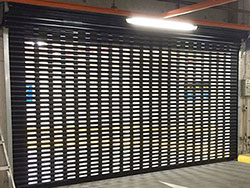


ROLL WITH THE TIMES – Motorising industrial roller shutters and doors
Industrial roller doors offer viable solutions for commercial and warehousing premises, but are your roller shutters and doors automated or do you still have the manual roll-up versions? What are the benefits of Roller Shutter Motors?
There are safety recommendations outlined in workplace guidelines for opening and closing roller doors and shutters. Many of them involve avoiding human error, such as using excessive force, awkward postures or overreaching to open or close the rollers, and keeping hands, loose clothing and other items clear of the mechanisms as they operate.
When considering the health and safety of your staff, it’s worth turning your mind to the benefits of installing roller door motors or roller shutter motors.
Rather than having employees spend time and effort bending and stretching to roll down or lift large doors and shutters, or having to rotate people on door duty to avoid repetitive strains, it makes sense to motorise and automate where possible.
Roller door springs and hardware are under high tension, and faults can cause serious personal injury. So it is wise to distance staff from the dynamic and inertial forces at play. Motorising a unit and ensuring it receives adequate monitoring, repair and upkeep are good ways to minimise risk. Frequently examine doors, particularly cables, springs and mountings for signs of wear, damage or imbalance. Do not use if repair or adjustment is needed, since a fault may cause injury.
Automated commercial roller doors come with ‘force settings’, which are set so the door or shutter reverses if it encounters too much resistance while closing or opening. A reversing mechanism is activated by either an electronic or pneumatic switch that senses an obstruction and reverses a closing door back to the open position. Where a mechanical door is powerful enough to lift a person, it’s wise to carry out a risk assessment to evaluate this hazard and ensure suitable measures are provided.
In the long run, motorising roller shutters and doors can save a lot of time and effort, freeing your staff to get on with the work at hand, without undue strain or distractions. Remote control devices are usually able to be installed or added, for even greater ease of operation.
If you’re after expert advice, installation, repair, refurbishment or replacing of roller door motors in the Sydney area, call Able Doors. We are happy to assist.